Greetings!
There is a big difference between understanding how an NDS is structured and actually knowing how to work through one.
Once you move beyond the fundamentals, the questions get more specific.
What belongs in Modules 3, 4, and 5? How do you manage an eCTD submission once it is already in motion? What happens when Health Canada comes back with questions? And how do you prepare for the parts of the submission process that rarely look quite as tidy in practice as they do on paper?
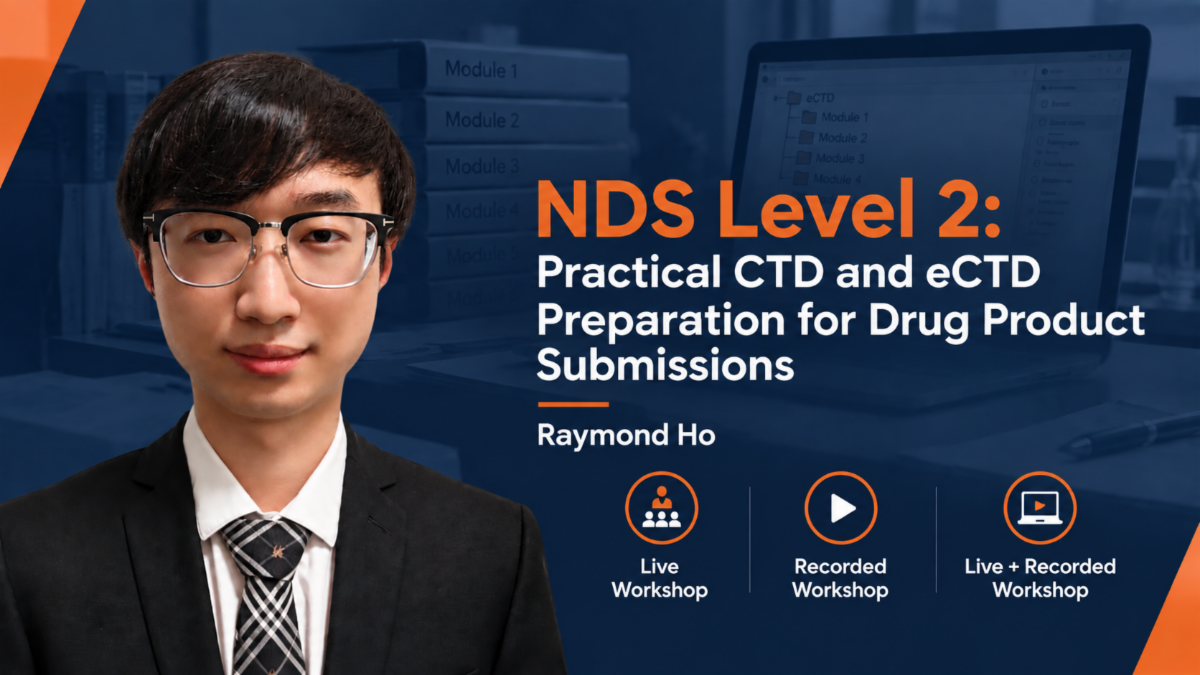
That is where NDS Submissions Explained: Level II picks up.
And this time, the workshop is being led by someone who has spent years working on these questions from inside regulatory affairs.
Meet Your Instructor: Raymond Ho
Raymond Ho is a regulatory affairs professional with more than seven years of experience across pharmaceuticals, medical devices, and natural health products.
His work has included drug submissions to Health Canada and the FDA, new and supplemental drug submissions, drug master files, eCTD filings, product lifecycle activities, pharmacovigilance reporting, and regulatory compliance.
At Johnson & Johnson MedTech, Raymond has also worked on regulatory strategy for a portfolio of high-risk orthopedic medical devices, leading submissions through Health Canada and securing approvals.
That breadth matters here.
Because Level II is not simply about learning what the CTD modules are. It is about getting closer to how submissions are prepared, managed, questioned, amended, and moved through the regulatory process in practice.
Raymond will take participants deeper into:
- Preparing and working through CTD Modules 3, 4, and 5
- Managing quality, nonclinical, and clinical documentation within an NDS
- Preparing for pre-submission meetings with Health Canada
- Responding to Notices of Deficiency (NOD) and Notices of Non-Compliance (NON)
- Managing the eCTD lifecycle, including amendments and additional information
- Formatting, cross-referencing, and hyperlinking submission documents effectively
- Understanding where eCTD and non-eCTD submissions differ
- Working through regulatory questions while keeping a submission compliant
- Looking at case studies to understand what successful NDS submissions involve
The goal is not simply to know more regulatory terminology. It is to leave with a better understanding of what happens when an NDS becomes real work, and how an experienced regulatory professional approaches the decisions, documentation, and regulator interactions that come with it.
Choose how you'd like to attend: |





No comments:
Post a Comment